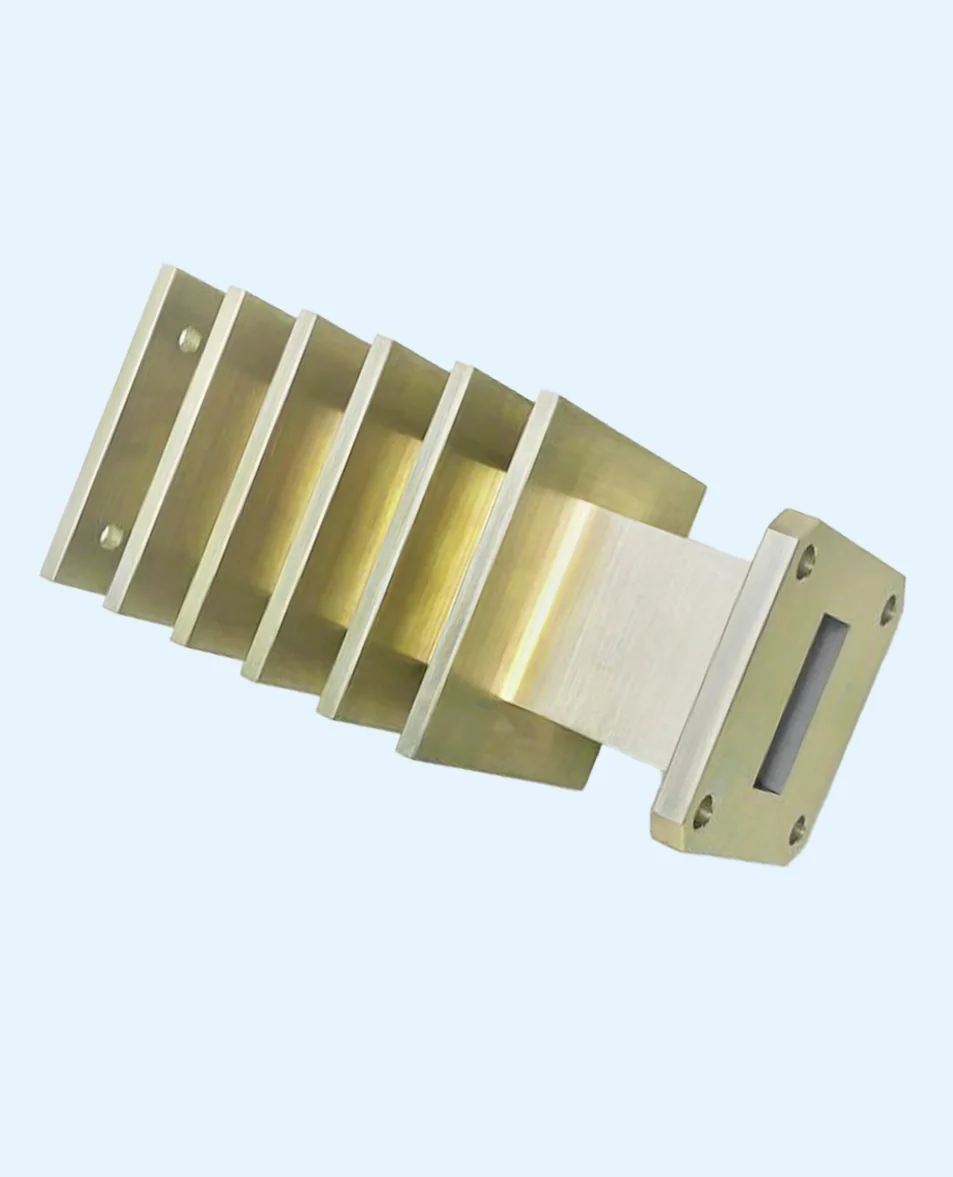
Waveguide termination loads are fundamental components in every RF test and measurement setup. Without a properly matched termination, signal reflections can corrupt measurement accuracy and potentially damage sensitive equipment. This article explains how termination loads work and how to select the right one for your application.
What Is a Waveguide Termination Load?
A waveguide termination (also called a matched load) is a passive device that absorbs electromagnetic energy at the end of a waveguide. It contains a lossy absorptive material shaped to gradually absorb the incoming wave with minimal reflection, providing a matched impedance across the operating bandwidth.
Why Terminations Matter for Accurate Measurements
Any unterminated waveguide port acts as a reflector, sending RF energy back into the system. These reflections create standing waves that corrupt S-parameter measurements, distort power readings, and can cause oscillation in amplifier circuits.
A well-designed termination provides return loss of 20 dB or better across the full operating bandwidth, meaning that less than 1% of the incident power is reflected back into the system.
Low Power vs. High Power Terminations
Low Power Terminations
Low power terminations are compact, lightweight loads designed for bench-top test environments. They handle milliwatt-level signals and are the standard choice for:
- Network analyzer calibration and verification
- Power meter reference port termination
- Unused port termination in multi-port test setups
- Receiver noise figure measurements
High Power Terminations
High power terminations incorporate heat-dissipating features such as larger body mass, cooling fins, or forced-air cooling provisions. They are designed for:
- Transmitter output testing and burn-in
- High-power amplifier characterization
- System integration testing under operational power levels
- Radar and communications system qualification
Key Selection Criteria
- Frequency range: Match the termination's WR size to your operating band
- VSWR specification: Target 1.10:1 or better for precision measurements
- Power handling: Select low or high power based on your signal levels
- Flange type: Verify compatibility with your existing waveguide hardware
Best Practices
Store termination loads with protective flange covers to prevent damage to the absorptive element. Inspect the waveguide aperture before each use. For precision measurements, allow terminations to reach thermal equilibrium before taking readings, as temperature variations can affect the absorptive material's performance.
Summary
Waveguide termination loads are essential for accurate RF measurements and safe system testing. Selecting the right termination for your frequency band, power level, and measurement application ensures reliable results and protects your equipment.