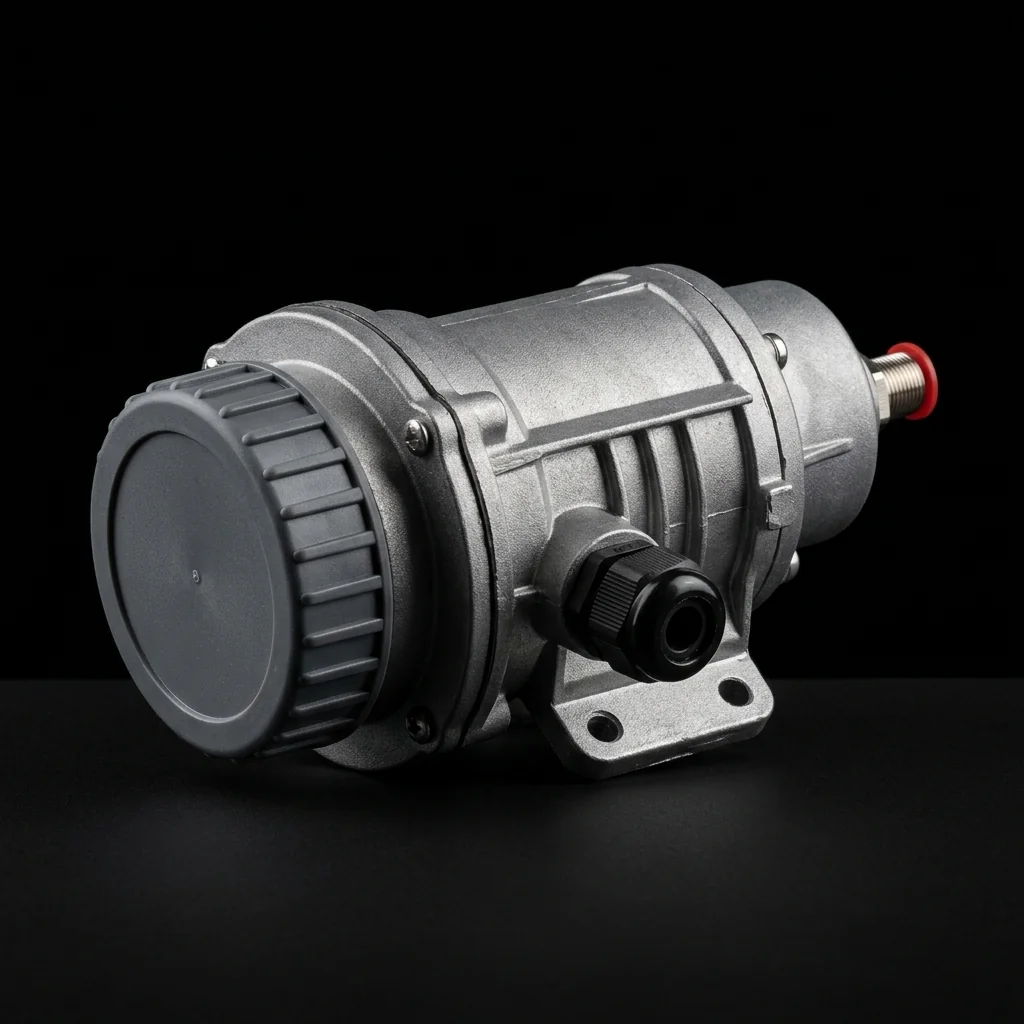
LNB
Downconverters
Low noise block downconverters (LNBs) from Ku-band to V-band. Integrated LNA and frequency downconversion with PLL and DRO LO architectures, outdoor-rated enclosures, and custom frequency plans for satellite receive chains, VSAT terminals, and gateway earth stations.
Integrated Low Noise Amplification and Downconversion
RF Essentials LNB downconverters combine a low noise amplifier (LNA) front end with RF-to-L-band frequency downconversion in a single integrated outdoor module. Each LNB receives the satellite downlink signal directly at the antenna feed, amplifies it with minimal noise contribution, and converts the entire frequency block to a standard L-band IF output (950-2150 MHz) for delivery to the indoor modem or receiver.
All units are custom-engineered to your specific frequency plan, noise temperature requirement, and deployment environment. Available with PLL or DRO local oscillator architectures across Ku-band, Ka-band, Q-band, and V-band satellite downlink allocations. Single and dual-polarization configurations supported with optional polarization switching.
LNB Downconverter Configurations by Band
Each row represents a configurable LNB capability across a target satellite downlink band. Noise temperature, IF output range, LO architecture, and packaging are tailored to your system requirements. All configurations deliver standard L-band IF output for indoor receiver or modem integration.
5 Band Configurations| Band | RF Input | IF Output | Noise Temp. | LO Type | LO Stability | RF Interface | Polarization |
|---|---|---|---|---|---|---|---|
| Ku-Band | 10.7 – 12.75 GHz | 950 – 2150 MHz | < 55 K | PLL / DRO | ±5 kHz (PLL) | WR-75 | Single / Dual |
| Ka-Band (Com) | 17.7 – 21.2 GHz | 950 – 2150 MHz | < 120 K | PLL | ±5 kHz | WR-42 | Single / Dual |
| Ka-Band (Mil) | 19.2 – 21.2 GHz | 950 – 2150 MHz | < 150 K | PLL | ±5 kHz | WR-42 | Single |
| Q-Band | 37.5 – 42.5 GHz | 950 – 1950 MHz | < 250 K | PLL | ±10 kHz | WR-22 | Single |
| V-Band | 47.2 – 51.4 GHz | 950 – 1950 MHz | < 400 K | PLL | ±10 kHz | WR-19 | Single |
All specifications represent configurable ranges. Actual performance is determined by the final custom design. Noise temperature, IF bandwidth, and LO architecture are tailored to each application. Contact engineering for detailed specifications and custom configurations.
Need a custom LNB for your frequency plan?
Our engineering team designs LNB downconverters to your exact specifications. Custom noise temperature, frequency coverage, LO stability, polarization, and environmental rating options available.
Design & Performance
Cryogenically optimized low noise amplifier front ends deliver noise temperatures as low as 55 K at Ku-band, preserving weak satellite signals with minimal degradation to the system G/T figure of merit.
Phase-locked loop local oscillator architectures deliver frequency stability of ±5 kHz or better with ultra-low phase noise, enabling high-order modulation schemes including DVB-S2X 32APSK and 64APSK.
Precision IF filtering and image-reject mixer topologies suppress unwanted image frequency responses, delivering clean IF output spectra with high spurious-free dynamic range across the full operating bandwidth.
Single and dual-polarization configurations with electronic polarization selection via DC voltage control. Supports horizontal/vertical linear and LHCP/RHCP circular polarization for global satellite coverage.
IP65/IP67 weatherproof enclosures rated for -40 to +60 degrees C operation. Designed for direct antenna-feed installation in harsh field conditions with integrated thermal management and UV-resistant housings.
Remote monitoring and control through Ethernet (SNMP/HTTP), RS-485, or serial interfaces. Real-time noise figure monitoring, LO lock status, and alarm management for unmanned or remote installations.
Where Our LNBs Perform
RF Essentials LNB downconverters are designed for integration into satellite receive terminals and ground station architectures across commercial, government, and defense platforms. From portable VSAT kits to fixed gateway installations, our LNBs deliver ultra-low noise reception at the antenna feed.
- Satellite Ground Terminals
- VSAT & HTS Networks
- Gateway Earth Stations
- Direct-to-Home (DTH)
- Military SATCOM
- Flyaway & COTM Terminals
- Radio Astronomy
- Test & Measurement
Frequently Asked Questions
A low noise block downconverter (LNB) is an integrated receive module that combines a low noise amplifier (LNA) with a frequency downconverter in a single outdoor-mount enclosure. Installed directly at the antenna feed, the LNB amplifies the weak satellite signal with minimal noise addition, then converts the entire received frequency block from the satellite downlink band (Ku, Ka, Q, or V-band) down to an L-band intermediate frequency (950-2150 MHz) for transmission over coaxial cable to the indoor receiver or modem.
RF Essentials LNB downconverters are available across Ku-band (10.7-12.75 GHz), Ka-band (17.7-21.2 GHz), Q-band (37.5-42.5 GHz), and V-band (47.2-51.4 GHz) satellite downlink allocations. Custom frequency plans, extended IF output ranges, and dual-band configurations are available for non-standard applications including military SATCOM, radio astronomy, and deep-space receive systems.
PLL (phase-locked loop) and DRO (dielectric resonator oscillator) refer to the local oscillator technology used inside the LNB. PLL-based LNBs offer superior frequency stability (typically ±5 kHz or better), lower phase noise, and tighter LO drift over temperature, making them essential for high-order modulation schemes like DVB-S2X. DRO-based LNBs are more cost-effective but have wider frequency tolerance (±1-3 MHz) and are suitable for standard DTH and lower-order modulation applications.
Yes. All RF Essentials LNB downconverters are custom-engineered to your system requirements. Custom options include specific frequency plans, noise temperature targets, IF output ranges, LO stability grades, polarization switching, waveguide interface types, environmental ratings, and mechanical packaging for prime-focus, offset-feed, or multi-feed antenna installations.