RF
Downconverters
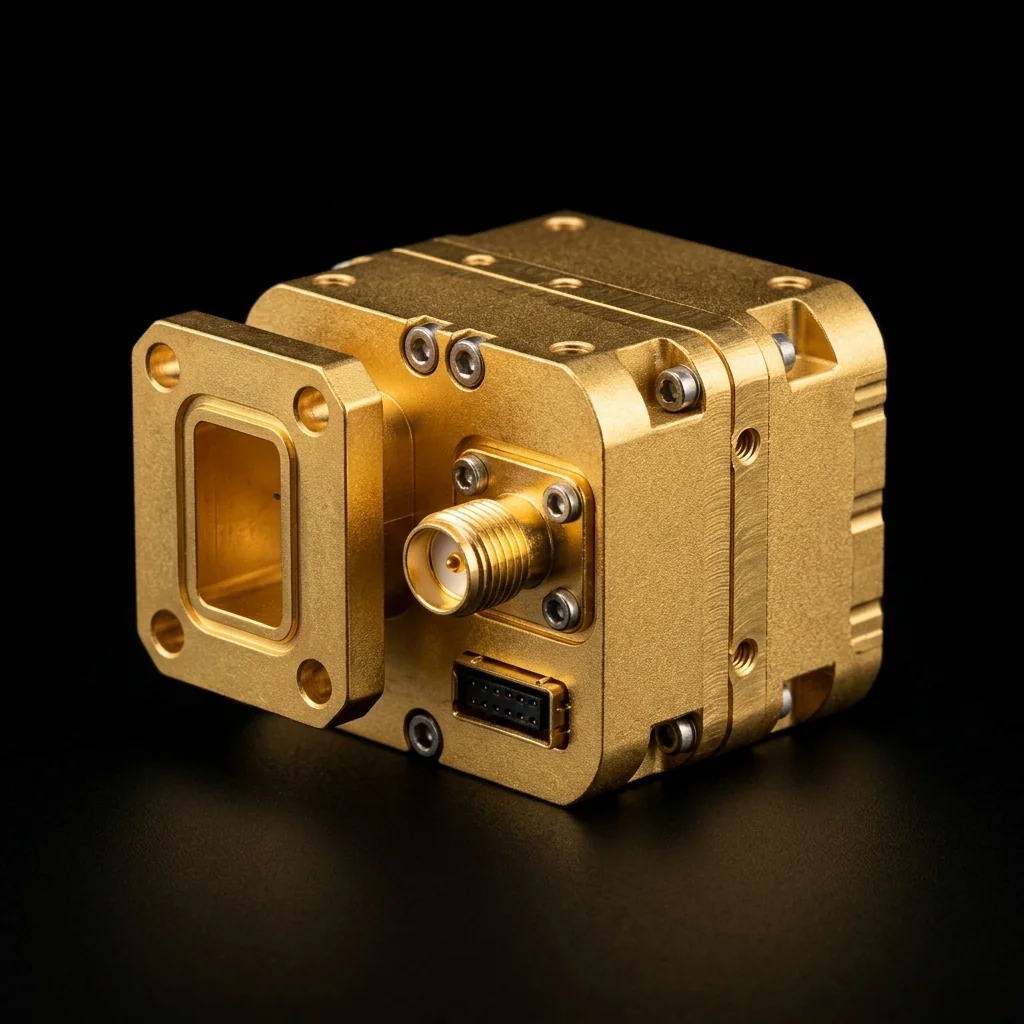
RF-to-IF frequency conversion modules from 38 GHz to 86.4 GHz. Internal phase-locked oscillators, low noise figure, and high conversion gain for satellite downlinks, radar receivers, telemetry, and test systems.
Precision RF-to-IF Frequency Translation
RF Essentials downconverters translate higher RF and millimeter-wave signals down to lower intermediate frequencies (IF) for processing in receive chains. Each unit features internal phase-locked oscillators or external LO support, low noise figure, and stable conversion gain across the operating band.
Available in Q-band (38.0-42.5 GHz), Ka-band (39.4-39.9 GHz), U-band (47.2-51.4 GHz), V-band (60-65 GHz), and E-band (70.4-86.4 GHz) configurations. All models support waveguide RF input interfaces and integration into rack-mount, laboratory, or ruggedized deployment platforms.
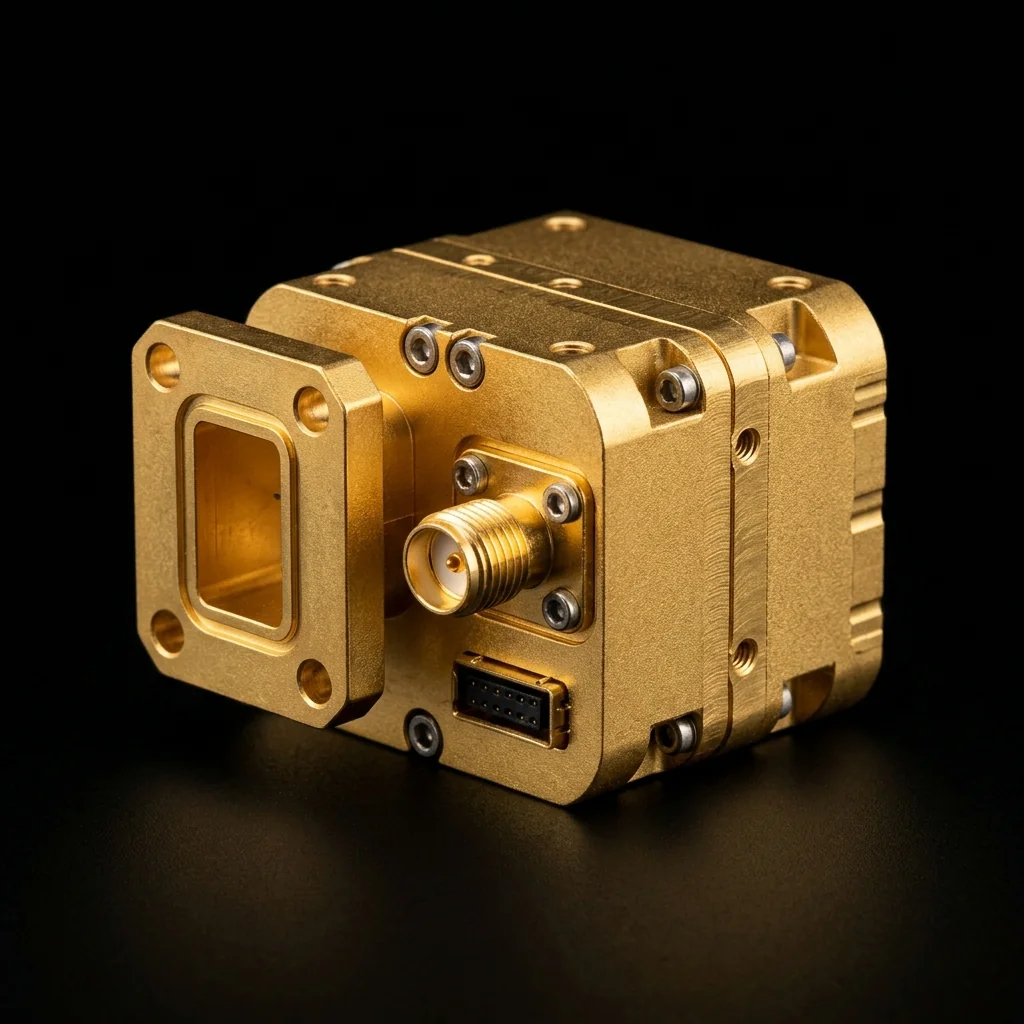
Downconverter Models by Frequency Band
Each row represents a specific downconverter model optimized for its target frequency band. Key specifications include RF input range, IF output range, conversion gain, noise figure, and LO configuration. Custom frequency plans and packaging available on request.
6 Downconverter Models| Band | RF Input | IF Output | Conv. Gain | Noise Figure | LO Type | RF Interface | IF Interface |
|---|---|---|---|---|---|---|---|
| Q-Band | 38.0 – 38.5 GHz | 950 – 1450 MHz | 30 dB | — | Internal PLO | WR-22 | SMA (F) |
| Ka-Band | 39.4 – 39.9 GHz | 950 – 1450 MHz | 30 dB | — | Internal PLO | WR-22 | SMA (F) |
| Ka / Q-Band | 37.5 – 42.5 GHz | DC – 10 GHz | 35 dB | — | Synthesized | Waveguide | SMA (F) |
| U-Band | 47.2 – 51.4 GHz | 1.85 GHz (Fixed) | 30 dB | — | Internal PLO | WR-19 | 1.85mm (F) |
| V-Band | 60 – 65 GHz | 1.5 – 5 GHz | 15 dB | 10 dB | External | WR-15 | SMA (F) |
| E-Band | 70.4 – 86.4 GHz | 3.2 – 19.2 GHz | 25 dB | 8 dB | External (16.8 GHz) | WR-12 | SMA (F) |
All specifications are typical at +25 °C. Actual performance may vary. Contact engineering for detailed datasheets, custom frequency plans, and environmental packaging options.
Up-Downconverter Models
Combined up-downconverter modules provide both transmit (IF-to-RF) and receive (RF-to-IF) frequency conversion in a single integrated package. These bidirectional units simplify transceiver architectures for SatCom terminals, radar systems, and full-duplex test benches.
3 Up-Downconverter Models| Band | Uplink RF | Downlink RF / IF | Tx Output | Rx Gain / Output | LO Type | RF Port | Ref / IF Port |
|---|---|---|---|---|---|---|---|
| Ka-Band | 35.61 GHz | 4 – 5.5 GHz | 0 to +6 dBm | -10 to +10 dBm | Internal VCO | K-Type | N-Type |
| U / Q-Band | 47.2 – 51.4 GHz | 37.5 – 42.5 GHz | 26 dBm (Sat) | −86 dBm (Repeater In) | Internal PLO | WR-19 | 10 MHz SMA (Ref) |
| W-Band | 95 – 100 GHz | 2.1 GHz (Fixed) | ~20 dBm (30 dB gain) | 35 dB gain / 5 dB NF | Internal VCO | WR-10 | — |
Up-downconverter specifications are typical at +25 °C. Bidirectional modules include both upconversion and downconversion signal paths in a single chassis. Contact engineering for full transceiver datasheets and custom configurations.
Need a specific frequency plan or custom configuration?
Our engineering team can provide pricing, datasheets, and custom configurations for any downconverter in the catalog. Multichannel architectures and ruggedized packaging available.
Design & Performance
15 to 35 dB of conversion gain across the product line reduces external amplification requirements and simplifies receive chain architecture.
Digitally controlled synthesized local oscillators with fine frequency resolution, supporting CW, sweep, and hop modes for agile signal generation.
Precision digital step attenuators with 0.5 to 1.0 dB resolution for repeatable output level management without external pads or gain stages.
High image rejection (up to 60 dB), strong harmonic suppression, and embedded RF cavity filtering deliver clean output spectra across the tuning range.
Ka-band model supports phase-matched dual-channel outputs for orthomode transducer interfaces, enabling horizontal and vertical polarization paths.
Commercial rack-mount, laboratory, airborne, and ruggedized enclosure options. Designed for deployment in controlled environments and harsh field conditions.
Where Our Downconverters Perform
RF Essentials downconverters support a wide range of receive architectures across commercial, defense, and research environments. From satellite ground terminals to millimeter-wave test benches, these modules provide the frequency translation performance your system requires.
- Satellite Downlink Systems
- Radar Receive Chains
- Electronic Warfare
- Telemetry & Aerospace
- Point-to-Point Microwave
- Test & Measurement
- 5G / 6G Research
- Wideband Signal Analysis
Frequently Asked Questions
An RF downconverter translates a higher-frequency RF or millimeter-wave signal down to a lower intermediate frequency (IF) using a mixer and local oscillator. This frequency translation is essential in receive chains for satellite communications, radar, telemetry, and wireless systems where the incoming signal must be shifted to a processable frequency before demodulation and digitization.
RF Essentials downconverters cover six frequency configurations: Q-band (38.0-38.5 GHz), Ka-band (39.4-39.9 GHz), wideband Ka/Q-band (37.5-42.5 GHz), U-band (47.2-51.4 GHz), V-band (60-65 GHz), and E-band (70.4-86.4 GHz). Each model uses waveguide RF input interfaces matched to its operating band.
Conversion gain is the net signal gain provided by the downconverter during frequency translation from RF to IF. Values range from 15 dB to 35 dB depending on the model. Higher conversion gain reduces the need for external low-noise amplification stages in the receive chain, simplifying system architecture and improving overall sensitivity.
Yes. All six downconverter models are designed for satellite downlink and receive applications. The Q-band and Ka-band models use internal phase-locked oscillators for stable narrowband reception, while the wideband Ka/Q-band model supports broadband signal analysis with a synthesized LO. Each unit features waveguide RF input and SMA IF output for standard system integration.